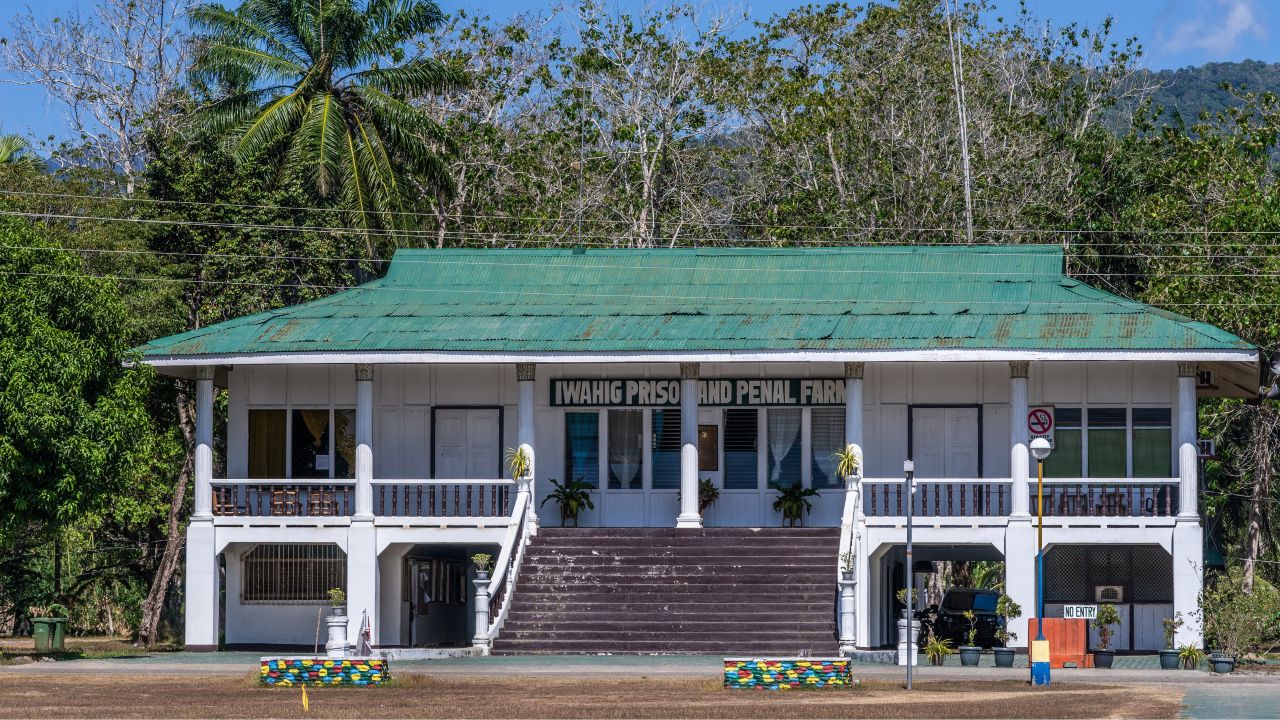
The special economic zone will be developed on idle land of the Bureau of Corrections (BuCor) within the Iwahig Prison and Penal Farm, which is roughly 20 kilometers away from the downtown area of Puerto Princesa City. Photo credit: iStock/ClaudineVM.
The planned 28,000-hectare economic zone is expected to promote cross-border investment and trade linkages, enhance transport connectivity, and strengthen regional value chains.
The Philippines is set to develop one of the country’s largest economic zones in Palawan. The 28,000-hectare Palawan Mega Ecozone is being positioned to play a key role in the BIMP-EAGA subregion. It will be developed on idle land of the Bureau of Corrections (BuCor) within the Iwahig Prison and Penal Farm, which is roughly 20 kilometers away from the downtown area of Puerto Princesa City. The penal colony is the largest open-air prison in the country that focuses on rehabilitation.
The Philippine Economic Zone Authority (PEZA) will convert an initial 4,000 hectares as Phase 1 of the project. A report from state-run Philippine News Agency in November said the BuCor has granted PEZA full and exclusive rights to use the property for 50 years with a provision to renew the agreement for another 25 years. PEZA will remit 90% of collected monthly rental fees from registered enterprises at the economic zone to BuCor. PEZA retains 10% as management fee.
“The Palawan Mega Ecozone is envisioned to attract environmentally responsible industries, such as agro-industrial processing, renewable energy, ecotourism, and marine biotechnology,” said PEZA Director General Tereso O. Panga.
High potential
The economic zone will be located in BIMP-EAGA’s West Economic Corridor (WEC), which stretches across Brunei Darussalam, Indonesia, Malaysia, and the Philippines. WEC is an oil and gas, transport, and logistics corridor with the potential of becoming a financial, digital, and renewable energy hub. The corridor spans biodiversity-rich areas of Borneo, which may be promoted as an ecotourism circuit together with Palawan, known as the Philippines’ “last ecological frontier.”
Given its strategic location, the Palawan Mega Ecozone is expected to increase cross-border investment linkages and the flow of trade, promote high-value industries, and strengthen participation in regional and global value chains, including of small and medium-sized enterprises. The project is estimated to create more than 480,000 direct jobs, benefiting local communities and persons deprived of liberty (PDLs), and generating economic opportunities in the western regions of the Philippines.
BuCor is planning to build an airport and seaport as part of its Iwahig Prison and Penal Farm (IPPF) Development Project, which also covers prison expansion, industrial and agricultural development, and tourism programs. BuCor Director General Gen. Gregorio Pio P. Catapang Jr. said 1,000 hectares may be allocated for the development of the airport, making it nearly twice the size of the Ninoy Aquino International Airport (NAIA), currently the country’s largest airport. The Ihawig airport will dwarf the Puerto Princesa International Airport, which has a total land area of 121.39 hectares.
The seaport will be developed to serve BIMP-EAGA, enhancing maritime connectivity in the subregion. Inagawan, one of the four districts of Iwahig, faces the Sulu Sea.
The PEZA Board, which is chaired by the Secretary of the Department of Trade and Industry, approved the Palawan Mega Ecozone, in 2025. It formed a technical working group comprising the Department of Environment and Natural Resources (DENR), Department of Agrarian Reform (DAR), National Water Resources Board (NWRB), Department of Agriculture (DA), Department of Economy, Planning, and Development (DepDev), the host local government, and the Palawan Council for Sustainable Development to fast-track the proclamation of the Palawan Mega Ecozone as an economic zone.
The President must issue a proclamation to declare a tract of land as a special economic zone. Existing economic zones in Palawan include the Brooke's Point Agro-Industrial Economic Zone, the Green Tourism Ecozone – Pangulasian in El Nido, Pamalican and Island Tourism Ecozone in Cuyo, and Rio Tuba Export Processing Zone in Bataraza.
Boosting regional cooperation and integration
PEZA is targeting to establish more economic zones in the country. It is stepping up efforts to attract multinational corporations seeking secure and integrated production hubs given recent shifts in the global trade landscape. As global supply chains move toward "friend-shoring" and regional diversification, the agency sees the ability to provide a predictable and efficient regulatory environment as a critical differentiator for investment destinations.
Special economic zones are well-developed industrial spaces that offer fiscal incentives and streamlined regulations to attract investors.
“We are proactively aligning our investment strategies with the evolving needs of the global market,” said Panga. “Challenges brought about by the US–Iran conflict affords us the chance to strengthen inter-ASEAN trade relations by establishing new supply chains and higher cooperation among key industries like energy, renewables and agriculture. While these external shifts present new complexities, the Philippines’ commitment to institutional stability and investor-friendly reforms serves as a powerful magnet for long-term capital. We are not just observing global trends and strengthening relations with our regional neighbors, we are positioning the country to lead in the new industrial order.”
This direction is consistent with BIMP-EAGA’s strategy to accelerate regional connectivity and integration through enhanced cooperation in economic zones. The subregion is in the process of establishing an Economic Zones Working Group to provide a dedicated platform for strengthening coordination among stakeholders on ongoing and planned economic zone initiatives. It will align the development of special economic zones with strategies under the new BIMP-EAGA Vision 2035 to develop the subregion’s reconfigured, expanded, and interlinked economic corridors and create a single market and production base. This involves increased cooperation to improve policy coordination, regulatory harmonization, systems integration, data and knowledge sharing, and transparency and monitoring. Joint promotion and marketing will also strengthen BIMP-EAGA’s positioning to attract investors.