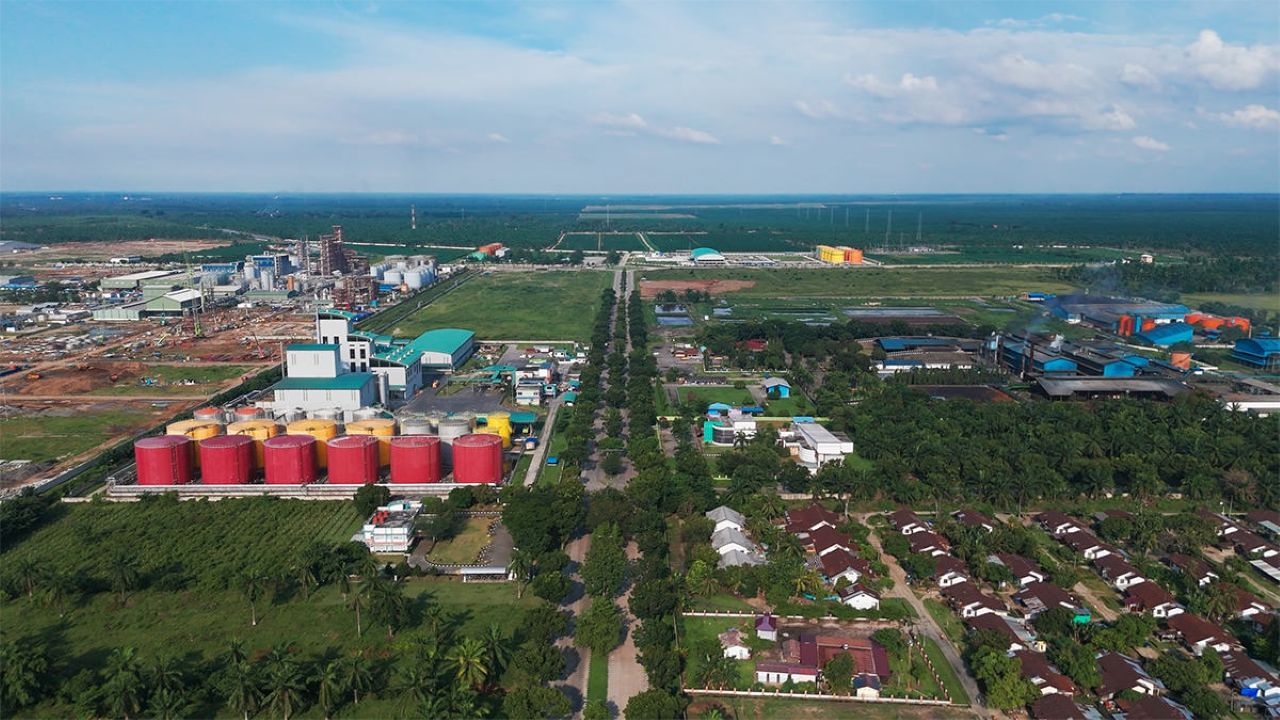
Workshop participants visited the Sei Mangkei Special Economic Zone in North Sumatra. Photo from seimangkeisez.com.
In Southeast Asia, countries have created special economic zones (SEZs) to promote export-oriented industrialization, attract investment, and increase job and business opportunities. Many SEZs, however, suffered from poor planning and governance, becoming isolated enclaves that failed to tap into large markets and integrate into regional or global value chains.
A recent workshop discussed how SEZs can be transformed into interconnected engines of growth, particularly along economic corridors, maximizing spillover effects and creating and deepening linkages to the domestic and regional economy. SEZs were originally designed to be insulated from the rest of the economy and became testing grounds for export subsidies and incentives and incubators for higher technology. To become globally competitive, SEZs must now become integrated, digitally enabled, and environmentally sustainable hubs.
The workshop was organized by the Asian Development Bank (ADB) and Indonesia’s Coordinating Ministry for Economic Affairs (CMEA) on 22 to 25 June 2026 in Medan, North Sumatra province. Thirty-three officials from three subregions in Southeast Asia—Brunei Darussalam–Indonesia–Malaysia–Philippines East ASEAN Growth Area (BIMP-EAGA), the Indonesia–Malaysia–Thailand Growth Triangle (IMT-GT), and the Greater Mekong Subregion (GMS)—joined the workshop.
“For many years, SEZs have successfully attracted investment and stimulated industrial growth. However, the next generation of SEZs must evolve beyond their traditional role as isolated investment destinations,” said Dikky Anugerah, who heads regional development planning at the Research and Innovation Agency (BAPPERIDA) of North Sumatra, in his remarks at the closing ceremony.
“They must become dynamic ecosystems that create opportunities not only within the boundaries of a zone but across entire economic corridors. Ecosystems that connect industries with logistics networks, digital infrastructure, skilled human resources, innovation centers, research institutions, surrounding communities, and regional markets,” he said.
Economic corridors are at the core of the development and growth strategies of BIMP-EAGA, IMT-GT, and GMS. Most SEZs across these subregions, however, have weak linkages to economic corridors where investments in connectivity and hard and soft infrastructure are being targeted. Aligning SEZ development with economic corridors is key to unlocking opportunities for deeper economic integration of the subregions through production, investment, and value chain development.
“Leveraging SEZs to advance regional cooperation requires coordinated policy, institutional, and investment interventions,” said Pamela Asis-Layugan, regional cooperation specialist at ADB’s Southeast Asia Department, who designed the workshop.
“Interventions include promoting cross border and joint ventures in SEZs, particularly those located near borders or along corridors; strengthening linkages to regional and global value chains through harmonized standards, trade facilitation, and logistics integration; gradually integrating regional economies through coordinated investment and industrial strategies; and supporting enabling legal and regulatory frameworks, including investment protection agreements, double taxation agreements, and free trade agreements,” she said.
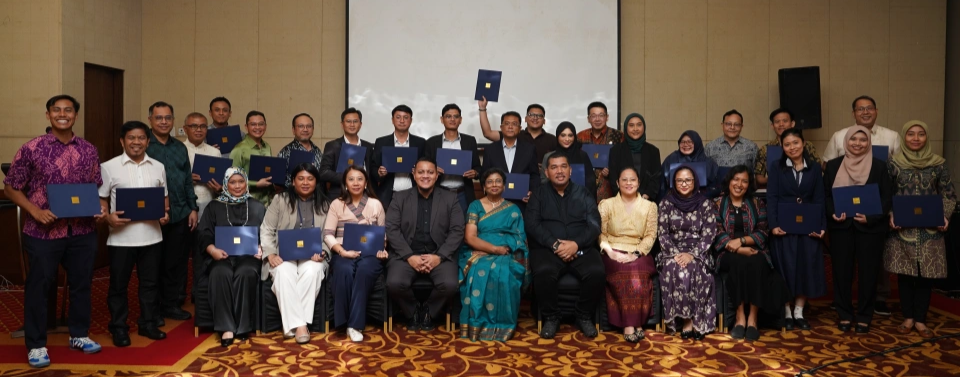
Government officials from three subregions—Brunei Darussalam–Indonesia–Malaysia–Philippines East ASEAN Growth Area (BIMP-EAGA), the Indonesia–Malaysia–Thailand Growth Triangle (IMT-GT), and the Greater Mekong Subregion (GMS)—joined the workshop on special economic zones in Medan, North Sumatra.
The workshop focused on developing the next-generation SEZs that are responsive to global shifts toward low-carbon production, digital trade, and resilient supply chains.
“To remain competitive and future-ready, SEZs must transition toward green and digital models that integrate clean energy, resource-efficient infrastructure, and environmentally responsible practices, alongside interoperable digital systems and data-enabled trade that facilitate seamless trade, logistics, and regulatory processes,” said Aradhna Aggarwal, senior advisor to the Trade and Technology Skills Unit of the National Council of Applied Economic Research in Delhi, India, who served as a technical expert at the workshop.
Through case studies and interactive sessions, workshop participants explored SEZ design, implementation, and evaluation to strengthen cross-border value chains and align SEZ development with green and digitalization priorities and inclusive and sustainability goals.
A technical visit to the Sei Mangkei SEZ, Indonesia’s first operational zone, showed how industrial development can integrate with logistics, renewable energy, and agro-industrial value chains, offering practical insights for SEZ planning, governance, and regional integration.
At the end of the 4-day workshop, participants developed an actionable agenda for SEZs development and identified areas for cooperation at both national and subregional levels.
Organized under ADB’s BIMP-EAGA, IMT-GT and GMS Capacity Building Program, or B-I-G Program, the workshop was led by Layugan and Aggarwal.